














Which Book Will Actually Transform Your Relationship?
Introduction: Two Approaches to Modern Love
If you’ve ever scrolled through relationship advice online, asked a therapist for book recommendations, or searched for answers after yet another confusing dating experience, you’ve almost certainly encountered The Five Love Languages. Gary Chapman’s 1992 classic has sold over 20 million copies and spawned an entire vocabulary that’s become romantic shorthand: “My love language is quality time.” “He’s such an acts of service guy.”
But here’s a question that doesn’t get asked often enough: Does this framework actually help women navigate modern relationships?
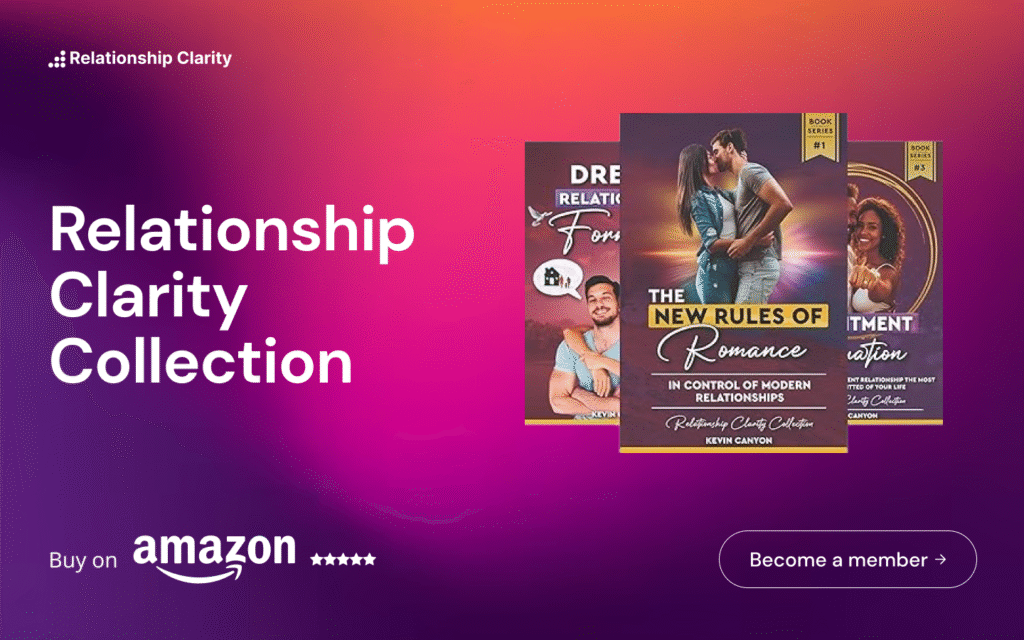
Enter The New Rules of Romance by Kevin Canyon a book that takes a fundamentally different approach. Rather than asking “How should I express love?” it asks “What has actually changed about relationships, and how do I respond to that reality?”
In this comparison, we’ll examine both books across multiple dimensions: scientific validity, practical application, and most importantly—which one actually helps you avoid wasting years on the wrong person.
The Five Love Languages: A Quick Overview
Author: Gary Chapman (Baptist pastor and marriage counselor)
Published: 1992
Core Premise: Every person has a primary “love language”—a specific way they prefer to give and receive love. The five languages are Words of Affirmation, Quality Time, Receiving Gifts, Acts of Service, and Physical Touch.
Chapman’s thesis is straightforward: relationship problems often stem from partners “speaking different languages.” If you express love through acts of service (doing the dishes, handling logistics) but your partner’s love language is words of affirmation (verbal praise and encouragement), they may not feel loved—even when you’re actively trying to show love.
The book’s appeal lies in its simplicity. It gives couples a shared vocabulary to discuss their needs and provides a framework for understanding why your efforts might not be landing the way you intended.
The New Rules of Romance: A Quick Overview
Author: Kevin Canyon
Published: 2025
Core Premise: The entire relationship landscape has fundamentally transformed over the past 50-75 years due to technological, social, and cultural shifts. Traditional dating advice fails because it doesn’t account for these changes.
Canyon’s approach is diagnostic rather than prescriptive. Before offering solutions, the book maps the terrain: How has dating app culture changed expectations? Why are men increasingly skeptical of commitment? What happens when women’s career priorities shift relationship timelines? How do hook-up culture and choice overload affect intimacy formation?
The book draws on established psychological frameworks—including Sternberg’s Triangular Theory of Love (intimacy, passion, commitment)—while acknowledging how modern dynamics have disrupted each component. It’s part of a four-book series that addresses different relationship stages, from initial dating through commitment and understanding why relationships end.
Point-by-Point Comparison
1. Scientific Foundation
The Five Love Languages
Here’s where things get uncomfortable for Chapman enthusiasts. A comprehensive 2024 study by Emily Impett and colleagues at the University of Toronto systematically evaluated Chapman’s three core claims and found none of them held up to scientific scrutiny:
- Claim: Each person has a primary love language. Reality: When researchers didn’t force people to choose between options, participants rated all five languages as important. People don’t actually have dominant preferences—they want love expressed in multiple ways.
- Claim: There are exactly five distinct love languages. Reality: Research by Stafford (2011) found seven categories, and Chapman’s original categories show significant overlap. The framework may be arbitrary.
- Claim: Couples who “speak” each other’s language are more satisfied. Reality: No study has found strong evidence for this “matching effect.” A 2017 study in Personal Relationships found no significant correlation between love language compatibility and relationship satisfaction.
Perhaps most damning: Chapman developed this framework from counseling sessions with “white, religious, mixed-gender, traditional couples” and admits in his book that he “has not written this book as an academic treatise.” The theory emerged from clinical observation, not systematic research—with no control groups, statistical analysis, or peer review.
The New Rules of Romance
Canyon takes a different approach – building on established, peer-reviewed frameworks rather than inventing new ones. The book references:
- Sternberg’s Triangular Theory of Love: A well-validated model examining intimacy, passion, and commitment as distinct relationship components.
- Attachment Theory: Decades of research on how early attachment patterns influence adult relationships.
- Gottman’s Research: Including the 5:1 ratio of positive to negative interactions that predicts relationship success.
- Social Exchange Theory: How people evaluate relationships based on costs, benefits, and alternatives.
- Meta-analyses on partner selection: Including research showing that shared traits (political views, education levels, values) correlate with relationship success.
Verdict: The New Rules of Romance builds on decades of validated relationship science. The Five Love Languages rests on intuition presented as science.
2. Practical Application
The Five Love Languages
The book’s greatest strength is giving couples a vocabulary to discuss their needs. Many readers report genuine “aha” moments—finally understanding why their partner seemed indifferent to efforts that felt significant to them.
However, the framework has a critical limitation: it assumes both partners are willing participants operating in good faith.
Consider a Reddit comment from someone whose marriage “failed” despite both partners reading the book: “My mother used it as an opportunity to berate my father.” Or another: “My wife and I read it… Around a month ago, she screwed her boss and we’re getting a divorce.”
The love languages framework cannot distinguish between:
- A communication problem (partners genuinely trying but missing each other)
- An investment problem (one partner simply doesn’t care enough to try)
- A compatibility problem (fundamental values mismatch that no amount of “language learning” will solve)
- A character problem (someone who uses the framework manipulatively)
The New Rules of Romance
Canyon’s approach is explicitly diagnostic. Before asking “How do I make him feel loved?” it asks “Is this person capable of and willing to receive and reciprocate?”
The book addresses questions Chapman never touches:
- How do you distinguish between someone who’s “cautious from past hurt” versus someone who’s simply indifferent?
- What behavioral patterns predict whether someone will actually commit?
- When does trying harder become enabling poor treatment?
- How do you assess compatibility beyond surface-level attraction?
The “adorer and adored” concept illustrates this difference. Canyon writes: “True indifference—not hatred—is the opposite of love. When someone is indifferent to you in a relationship context, this isn’t something you’re likely to overcome.” No amount of learning someone’s “love language” changes their fundamental level of investment.
Verdict: Love languages is a communication tool. The New Rules of Romance is a diagnostic framework for evaluating whether a relationship is worth investing in at all.
3. Target Audience and Underlying Assumptions
The Five Love Languages
Chapman’s book was written for married couples seeking to improve existing, fundamentally stable relationships. The religious framing (“God chose you for each other”) assumes commitment is already established and couples simply need better tools for maintaining connection.
This creates a significant blind spot for anyone dealing with:
- Dating app culture and its paradox of choice
- Situationships where commitment is unclear
- Partners who won’t commit despite years of effort
- The modern phenomenon of men avoiding relationships entirely
The New Rules of Romance
Canyon explicitly targets “modern women aged 25-45 struggling with dating, situationships, and relationships where men won’t commit.” The book acknowledges an uncomfortable reality: the relationship landscape has fundamentally changed.
Topics addressed include:
- How dating apps have restructured the attention economy
- Why men’s incentives for commitment have decreased
- How women’s career prioritization affects relationship timelines
- The psychology behind “hook-up culture” and its effects on intimacy formation
- How to assess whether someone is actually capable of commitment
Verdict: Love languages assumes you’re already in a committed relationship worth improving. The New Rules of Romance helps you figure out if you should be in that relationship in the first place.
4. What Each Book Gets Wrong (or Misses)
The Five Love Languages: Critical Gaps
- Doesn’t distinguish preference from capacity. Someone might genuinely prefer acts of service but be incapable of reciprocating due to character issues, mental health challenges, or simple lack of investment.
- Can enable doormat behavior. The framework can be weaponized: “If I just learn his language better, he’ll finally commit/stop cheating/treat me with respect.”
- Ignores power dynamics. What happens when one partner uses their “love language” as a demand while refusing to speak their partner’s?
- Heteronormative and culturally specific. Developed from a narrow sample of white, religious, traditional couples.
- Missing dimension: autonomy. Research by Impett’s team found that supporting a partner’s personal goals outside the relationship is crucial—something Chapman’s framework entirely ignores.
The New Rules of Romance: Potential Limitations
- Some content may feel politically charged. Discussions of how feminism and women’s career prioritization have affected relationships may trigger defensive reactions – though Canyon explicitly states these are observations, not judgments.
- Requires more cognitive investment. Unlike the simple quiz-based approach of love languages, this book demands readers engage with complex social dynamics.
- Part of a series. While designed to work standalone, the full framework spans four books, which is a larger commitment than a single volume.
5. Emotional Impact and Reader Experience
The Five Love Languages
The book offers comfort and validation. Many readers describe “aha” moments of finally understanding long-standing frustrations. It’s hopeful—suggesting that with better communication, any relationship can improve.
However, this comfort can become a trap. When the framework doesn’t work, readers often blame themselves (“I must not be speaking his language correctly”) rather than questioning whether the relationship itself is the problem.
The New Rules of Romance
This book may be more challenging emotionally. Canyon doesn’t promise that every relationship can be fixed. Some passages may force uncomfortable realizations about current or past relationships.
However, readers describe a different kind of relief: the clarity of finally understanding why modern dating feels so difficult. The validation comes not from “you can fix this” but from “you’re not crazy for finding this hard—the game has fundamentally changed.”
What Both Books Share
Despite their different approaches, both books agree on some fundamental points:
- Healthy relationships require intentional effort from both partners
- Understanding your partner’s needs matters
- Communication is essential (though they define “communication” differently)
- The initial “in-love” phase is temporary—lasting relationships require something more
- Self-awareness about your own patterns is crucial
The Verdict: Which Book Should You Read?
Read The Five Love Languages if:
- You’re in an established, committed relationship where both partners are genuinely invested
- Your primary issue is communication style, not fundamental compatibility or investment levels
- You want a simple framework you can apply immediately
- You’re comfortable with religious framing (or can easily skip over it)
Read The New Rules of Romance if:
- You’re navigating the modern dating landscape and finding it confusing or exhausting
- You’ve been in situationships or relationships where commitment never materialized
- You want to understand why relationships feel harder today than they seemed for previous generations
- You need help distinguishing between fixable communication problems and fundamental incompatibility
- You want a framework grounded in peer-reviewed relationship science
Ratings Summary
The Five Love Languages
- Scientific Foundation: ★★☆☆☆ (2/5)
- Practical Application (for target audience): ★★★★☆ (4/5)
- Relevance to Modern Dating: ★★☆☆☆ (2/5)
- Overall: ★★★☆☆ (3/5)
The New Rules of Romance
- Scientific Foundation: ★★★★☆ (4/5)
- Practical Application: ★★★★☆ (4/5)
- Relevance to Modern Dating: ★★★★★ (5/5)
- Overall: ★★★★☆ (4.5/5)
Conclusion: The Question Behind the Question
Here’s what I’ve come to understand after examining both books: they’re answering fundamentally different questions.
The Five Love Languages asks: “How can I be a better partner within my existing relationship?”
The New Rules of Romance asks: “How do I navigate a transformed relationship landscape to find and build something worth having?”
If your relationship’s foundation is solid and you need better communication tools, Chapman’s book might help—despite its scientific limitations. The concepts have intuitive appeal, and the shared vocabulary alone creates value.
But if you’re wondering why you keep ending up in the same situations, why commitment seems impossible to secure, why dating feels fundamentally different than it did for your parents, or whether your current relationship is even worth the effort—that’s when you need a different framework entirely.
Because here’s the hard truth the love languages industry doesn’t want you to hear: sometimes the problem isn’t that you’re “speaking the wrong language.” Sometimes the problem is that you’re trying to have a conversation with someone who has no interest in listening.
The New Rules of Romance gives you the tools to tell the difference.
_______________________________________________
Have you read either of these books? Did The Five Love Languages transform your relationship—or leave you more confused? We’d love to hear your experience in the comments.
For more resources on navigating modern relationships, visit RelationshipClarity.com